
Hydronic Pump Selection Guide
Hydronic Pump Selection Guide
Choosing the right hydronic pump is essential for proper system performance, energy efficiency, and long equipment life. Whether you are working on a commercial heating system, chilled water loop, boiler system, or radiant heating application, the pump must be matched to the system’s flow and pressure requirements.
What Is a Hydronic Pump?
A hydronic pump moves water or a water-glycol mixture through a closed-loop heating or cooling system. These pumps are commonly used in boilers, chillers, air handlers, fan coils, heat exchangers, radiant floor systems, and commercial HVAC systems.
Why Proper Pump Selection Matters
An incorrectly sized pump can cause poor system performance, high energy costs, noise, vibration, and premature equipment failure. A pump that is too small may not deliver enough flow, while a pump that is too large can waste energy and create unnecessary system stress.
Key Factors When Selecting a Hydronic Pump
1. Required Flow Rate
Flow rate is usually measured in gallons per minute, or GPM. It represents how much water the pump must move through the system. The required flow rate depends on the heating or cooling load and the system temperature difference.
2. Total Head
Total head is the amount of resistance the pump must overcome. It is commonly measured in feet of head. Pipe length, fittings, valves, coils, strainers, heat exchangers, and other components all add resistance to the system.
3. System Type
Different hydronic systems require different pump types. A small closed-loop heating system may use an inline circulator, while a large commercial building may require a base-mounted centrifugal pump or vertical inline pump.
4. Pump Material
Pump material should match the fluid and application. Cast iron is common for closed-loop hydronic systems. Bronze or stainless steel may be required for domestic water or open systems.
5. Motor Requirements
Check the required voltage, phase, horsepower, and enclosure type. Commercial systems may require three-phase power, while smaller systems may use single-phase motors.
6. Efficiency
Energy-efficient pumps can reduce operating costs over time. Variable speed pumps are often a good option when system demand changes throughout the day.
Common Types of Hydronic Pumps
Inline Circulating Pumps
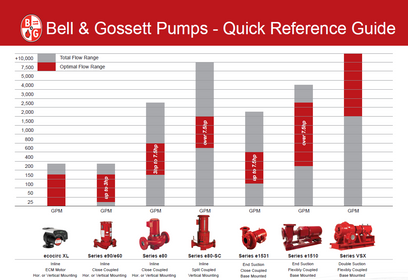
Inline pumps are compact and installed directly in the piping. They are commonly used in heating loops, zone pumping, and smaller commercial systems.
End Suction Pumps
End suction pumps are often used in larger commercial HVAC systems. They are durable, serviceable, and available in a wide range of flow and head capacities.
Vertical Inline Pumps
Vertical inline pumps save floor space and are commonly used in mechanical rooms where space is limited.
Base-Mounted Pumps
Base-mounted pumps are used for larger systems requiring higher flow rates and horsepower. They are often selected for commercial heating and cooling applications.
Variable Speed Pumps
Variable speed pumps adjust their speed based on system demand. This can improve efficiency, reduce noise, and lower energy usage.
How to Size a Hydronic Pump
Hydronic pump sizing starts with two main values: flow rate and head. Once these are known, you can use a manufacturer’s pump curve to select a pump that operates near its best efficiency point.
Step 1: Determine Required GPM
The required flow rate depends on the system load and temperature difference. For heating systems, a common formula is:
GPM = BTU/hr ÷ (500 × ΔT)
In this formula, ΔT is the temperature difference between the supply and return water.
Step 2: Calculate Total Head
Total head includes the pressure drop through piping, valves, fittings, coils, heat exchangers, strainers, and other components. Accurate head calculation is important for proper pump selection.
Step 3: Review the Pump Curve
Find the required GPM on the horizontal axis and the required head on the vertical axis. The selected pump should operate close to the desired point and preferably near the pump’s best efficiency range.
Common Pump Selection Mistakes
- Selecting a pump based only on pipe size
- Oversizing the pump for “extra safety”
- Ignoring pressure drop through coils and valves
- Using the wrong pump material for the application
- Not checking voltage, phase, and motor requirements
- Choosing a pump without reviewing the pump curve
Signs the Wrong Pump Was Selected
- Poor heating or cooling performance
- Noisy piping or valves
- Excessive vibration
- High energy usage
- Short pump or seal life
- Difficulty balancing the system
Replacement Pump Considerations
When replacing an existing hydronic pump, start by identifying the current pump model, horsepower, voltage, phase, flange size, and performance requirements. If the exact replacement is unavailable, a cross-reference may be needed.
It is also important to consider whether the original pump was correctly sized. In some cases, replacing a pump with the same model may not solve ongoing system problems if the original selection was incorrect.
When to Use a Variable Speed Pump
Variable speed pumps are useful in systems with changing flow requirements. They can reduce energy consumption and improve system control, especially in buildings with multiple zones or variable demand.
Choosing the Right Brand
Popular hydronic pump manufacturers include Bell & Gossett, Armstrong, Taco, Grundfos, Wilo, and other commercial HVAC brands. The best choice depends on the application, availability, performance requirements, and serviceability.
Final Thoughts
Selecting the right hydronic pump requires more than matching pipe size or replacing an old unit with the same model. Proper selection depends on flow rate, total head, pump type, material, motor requirements, and system conditions.
A properly selected hydronic pump will improve comfort, reduce energy costs, extend equipment life, and keep the system operating reliably.
```
Recent Posts
-
Hydronic Pump Selection Guide
Hydronic Pump Selection Guide Choosing the right hydronic pump is essential for proper system perfor …May 23, 2026 -
Pump Curves Explained
Pump Curves Explained A pump curve is one of the most important tools used to select, size, and trou …May 23, 2026 -
Inline vs End Suction Pumps: What the Difference?
Choosing the right pump for an HVAC, hydronic, or commercial water system is critical for system per …May 21, 2026
